

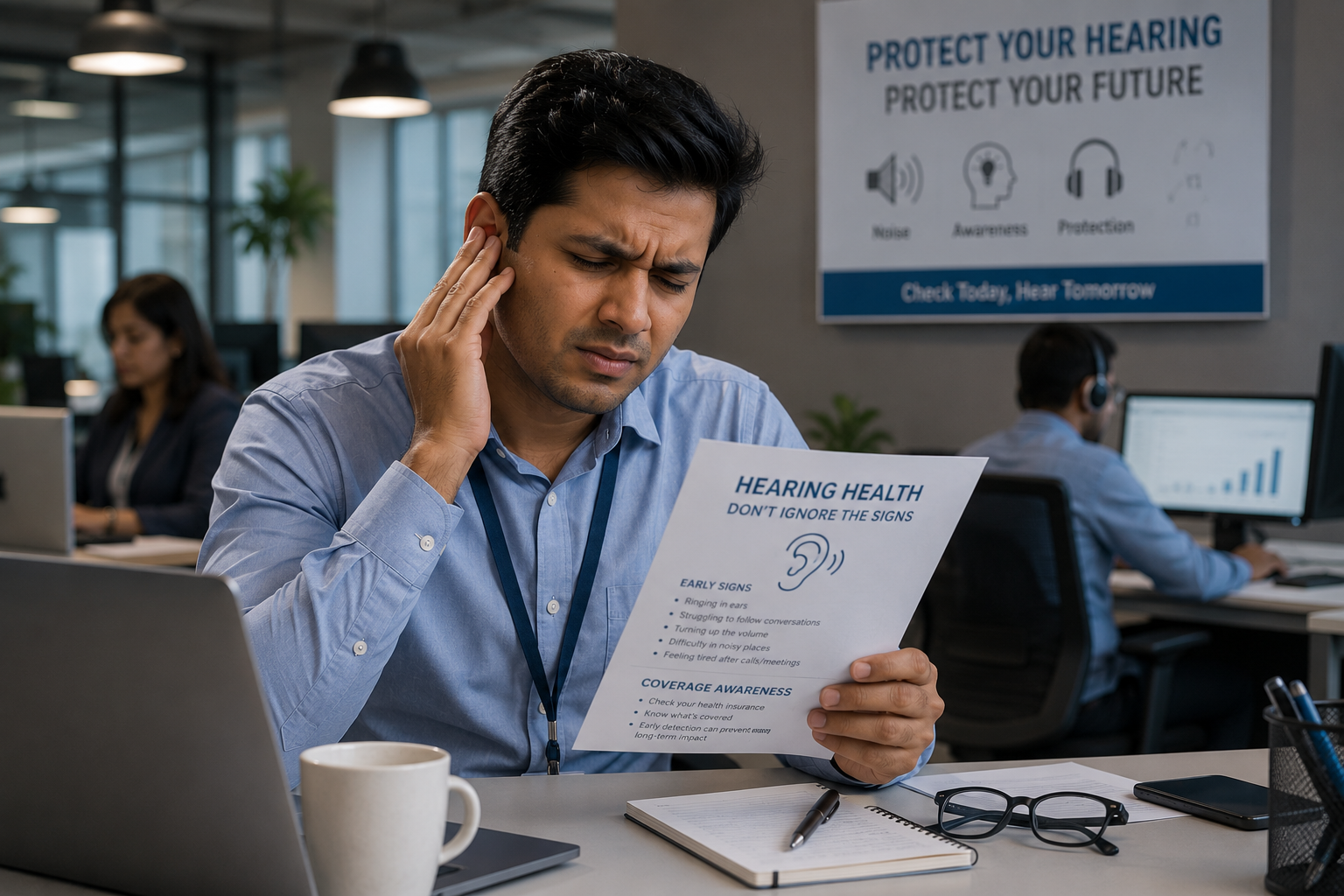
Occupational hearing loss is becoming an increasingly important workplace health concern, with long-term exposure to excessive noise and harmful chemicals posing serious risks to employee well-being and productivity.
Occupational hearing loss, though largely preventable, is commonly caused by prolonged workplace exposure to noise levels above 85 dBA (A-weighted decibels) or to ototoxic chemicals that damage the inner ear.
According to the World Health Organization (WHO), unaddressed hearing loss contributes to an estimated global economic burden of nearly one trillion US dollars annually.
Identifying early symptoms and addressing workplace risk factors are therefore essential for both organisations and employees.
Noise-Induced Hearing Loss
Human ears contain millions of delicate hair cells responsible for converting sound waves into electrical signals that are interpreted by the brain.
Continuous exposure to noise levels above 85 dBA gradually damages these hair cells. Since these cells cannot regenerate, the resulting hearing damage becomes irreversible.
Without timely intervention, prolonged exposure to excessive workplace noise can eventually result in partial or complete hearing loss.
Chemical-Induced Hearing Loss
Occupational hearing damage may also result from prolonged exposure to harmful chemicals such as heavy metals, solvents and pesticides.
These ototoxic substances can enter the body through inhalation, skin contact or contaminated food and drinks.
Once inside the body, these chemicals gradually damage ear cells and may even increase sensitivity to sounds below 80 dBA in certain individuals.
Importance of Early Diagnosis
Recognising early warning signs of hearing loss is crucial for preventing further deterioration in hearing capacity.
Common symptoms of occupational hearing loss include:
- Tinnitus or constant ringing sounds without an external source
- Difficulty hearing in noisy surroundings
- Struggling to hear natural sounds such as bird chirping
- Increasing television volume frequently
- Difficulty understanding conversations clearly
Although damage to ear hair cells cannot be reversed, early diagnosis can help prevent additional hearing decline.
Individuals experiencing these symptoms should consult an ENT (ear, nose and throat) specialist promptly for further medical evaluation and treatment guidance.
Workplace Responsibility and Prevention
Organisations play a critical role in reducing occupational hearing loss by implementing preventive workplace policies and hearing protection measures.
Creating safer work environments, monitoring noise exposure levels and promoting employee awareness not only support workforce well-being but also contribute to improved workplace productivity.
OPD and Health Insurance Relevance
Regular outpatient department (OPD) consultations are generally excluded from standard health insurance policies in India.
Additionally, the Insurance Regulatory and Development Authority of India (IRDAI) includes hearing aids among common policy exclusions.
While certain insurers may provide partial coverage for hearing aids and related treatment expenses, many companies continue to classify them as non-essential items.
This highlights the growing need for greater insurance awareness and reconsideration of policy guidelines related to hearing healthcare coverage.
Conclusion
Occupational hearing loss poses a serious threat not only to employee health and quality of life but also to organisational productivity.
Early identification of hearing-related symptoms, timely medical consultation and improved workplace preventive measures can significantly help in reducing long-term hearing complications.